On the Day Of My Brother’s Birth

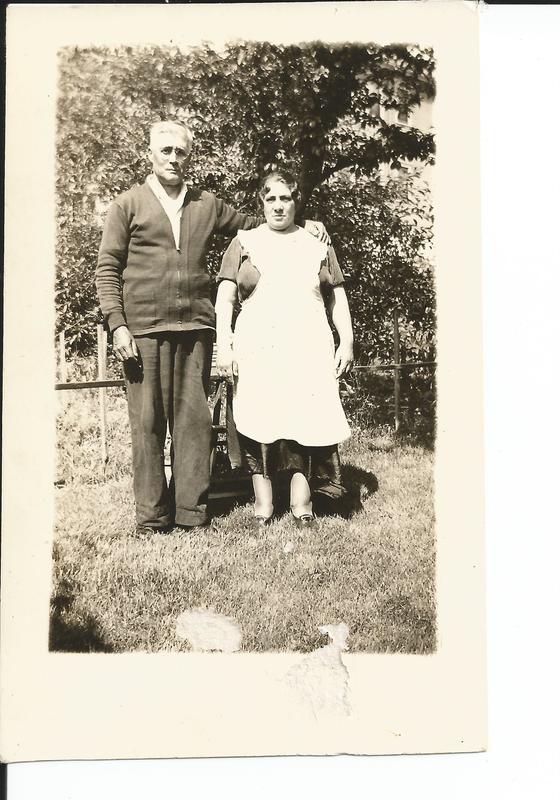
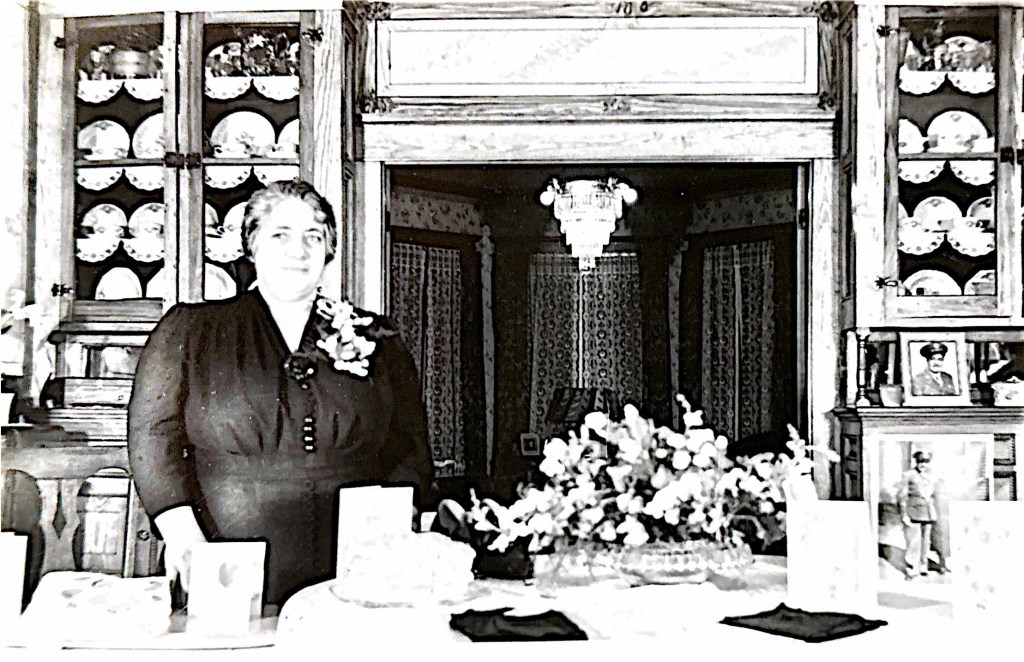
Vovó (circa 1950)

On the day of my brother’s birth, I woke up in my grandmother’s brass bed to the sounds of a whispered conversation in two different languages, both of which I understood, sort of. My grandmother, my vovó, had already gotten up, and I had the whole double bed to myself. When I say it was a brass bed, I use the term loosely. I know now that brass beds are not always made of brass; some are made of iron or a combination of the two metals. I also know now that brass beds are likely to be hollow, with brass plating over cast iron tubing. Vovó’s bed was hollow, and one of the finials at the foot of the bed was loose. When no one was looking, I would lift it off the bed post and position it on my head so that it looked like a crown. It was too small to be a crown for a grown-up, but I was only five years old. I would stand in front of Vovó’s mirror and pretend to be a queen or a princess. I would be happy. 

On the day of my brother’s birth, I didn’t have time to play with Vovó’s finial. I had to get ready for kindergarten, but first I had to deal with the voices coming from the living room. I understood enough of the whispers to know what I was about to be told, and it was what I had been expecting. Of course I was disappointed. I really wanted a sister, but my aunts and older cousins had been experimenting with the wedding-ring trick, tying my mother’s ring to a piece of string and suspending it over her tummy, watching to see whether it swayed from side to side or moved in circles. It definitely did not move in circles. It will be a boy, they said, and everyone except me was happy. 

On the day of my brother’s birth, four people were living in Vovó’s house: Vovó, my cousin Violet, my aunt Linda, and Tony, who used to be my aunt’s boyfriend and was now her husband. They had recently gotten married and were living with my grandmother until the new house they were building was ready. It would be a while. The new house was down a country road and up a narrow lane, and Tony was doing much of the work himself. People did that in those days, living with parents after the wedding, and Vovó had plenty of room now that her children were married. I was told to call Tony my uncle, but I still thought of him as my aunt’s boyfriend. The one good thing he did for me was to teach me how to catch a ball. Wait for it, he said, and, just before it gets to you, squeeze it. It worked! I would squeeze and there the ball would be, safe inside my hands. When I say they all lived in my grandmother’s house, I use the word house loosely. Vovó lived in a rented tenement, as most of us did back then. It was a big tenement on a first floor, and unlike my family’s tenement, which was a third-floor converted attic, it had both hot and cold running water, although they didn’t both come out of the same faucet. My mother had arranged to have me stay with my grandmother, her mother, while she was in the hospital waiting for the new baby. Vovó lived close to my school and would have no problem getting me there on time, but she wasn’t good at tying my hair ribbons tight enough. I was not happy about that, but I didn’t complain. I knew that I was a guest and had to be polite. 

On the day of my brother’s birth, I pretended to be happy about having a brother instead of a sister. I ate my breakfast, and Vovó walked me to my school. My cousin Violet had to ride a city bus to her school. She had turned sixteen on her last birthday, and she was eager to grow up, leave school behind, and get a job. She lived with our grandmother because she had gotten very sick one day when she was a baby. Vovó, who took care of her in the daytime while her mother, my aunt Mamie, was at work, called the doctor, and the doctor said Don’t move her. So they didn’t. At least that’s the explanation I was given. I wonder now whether the Depression might also have had something to do with it. At any rate Violet lived with Vovó until she got married years later to a man named Tony—another Tony—who played clarinet in a band. He had a daytime job, but the clarinet thing was more exciting. 

Aunt Mamie (Violet’s mother), Angelina (my mother), Aunt Linda, Vovó, and Violet. Photo taken on July 4, 1937

On the day of my brother’s birth, we all sat around my grandmother’s claw-footed table and had supper, and then Violet went out on a date. I wasn’t sure what a date was, but I knew it involved having a boy come for you in a car. Vovó saw a spattering of raindrops on the window and told Violet to take the guarda-chuva. Violet touched up her lipstick, grabbed the umbrella, and went out the door. After that it was all grown-up talk, and I realized that I missed my mother terribly. Vovó helped me get ready for bed. 

On the day of my brother’s birth, I heard loud noises and screams coming from the living room. I had been having a crazy dream about pendulums swinging back and forth, and at first I thought the noises were part of the dream. But I recognized the voices of Vovó, Aunt Linda, Tony, and Violet, and I knew something bad had happened. I walked out of Vovó’s bedroom, and nobody paid any attention to me. Violet was still holding the umbrella, and she looked angry. Vovó was hugging her, helping her unbutton her coat. Aunt Linda was sitting on the floor, leaning against the wall, trying to wedge her feet under the linoleum, while Tony tried to pull her back up into a standing position. What happened? I asked. Nobody answered. Then Vovó told me to go back to bed. Aunt Linda was still working at getting a whole foot, with its shoe on, under the linoleum, which was of course tacked to the hardwood floor. No one would talk to me. So I went back into my grandmother’s bedroom, pulled the loose finial off the bed post, and put it on my head. I wanted to be the queen. 

On the day after the day of my brother’s birth, Aunt Linda, who was her normal self again, helped me put all the pieces together in my head. Here’s what happened: Violet’s date dropped her off at the curb and then drove away. As Violet was walking toward the door, a man—a stranger—jumped out of the bushes and tried to grab her. Violet began hitting him with her umbrella, hitting him hard, all the while screaming as loud as she could. She was a loud screamer, and her screams woke any of the neighbors who might have been asleep. But it was still early and probably no one was asleep except me. Violet kept on hitting—it was a big umbrella—and lights came on, people looked out of windows, and the man ran away. Back into the bushes, back into whatever sort of world people like that live in, back away from the safe world of good people celebrating good things like the day of my brother’s birth. When you go out on a date, Aunt Linda said, and she probably even wagged a finger at me although I can’t remember for sure, make sure your date gets out of his car and walks you to your door. I still wasn’t sure what a date was. I still was only five years old. But I would hear that advice often over the years from my aunt and from my mother, whom I still missed terribly and wouldn’t see for a couple more days. Violet didn’t say a lot, though. She was tough and brave. 

On the day of my brother’s birth, I learned that good and evil can be so close together that if you squeeze at the wrong time you might get something you don’t want. I learned that gold crowns don’t grow on brass beds. I learned that yes, of course, a girl’s date should walk her to her door, but what if he doesn’t? What if he doesn’t? It would be a long, long time before I went on a date of my own, but I knew what I had to do. Simple enough. Always, whether the sun was smiling like a big yellow omelet or the rain was spitting its anger against the windowpane, I would carry an umbrella. A big one with a long, curved handle. Every time I went on a date. Always. 

Photo by MarylandGeoffrey, via Wikimedia Commons

The Bizarro Yankee Doodle Dandy

The Vieira Family: My grandfather Joseph Vieira surrounded by my grandmother Margarida Frias Vieira, Mamie Vieira (older girl), Angelina Vieira (younger girl), and Walter Vieira.

Yesterday was the Fourth of July. Independence Day is not my favorite holiday. In fact, it’s my least favorite holiday, not because I lack patriotic fervor and not because I hate fireworks (although I do hate fireworks if they’re directly over my head)—no, not for either of those reasons. I certainly don’t hate the music, most of which was written by John Philip Sousa, and I even like the Bizarro version of “Stars and Stripes Forever” with its lyrics about ducks and mothers. In fact I love the music, and I used to love the annual telecast of the Boston Pops concert from the Hatch Shell. The evening always ended with Tchaikovsky’s 1812 Overture and televised fireworks over the Charles River. This year’s concert was performed at Tanglewood, although the fireworks still happened in Boston. Unfortunately our PBS station didn’t carry any of it, opting instead for A Capitol Fourth, which I didn’t watch and don’t have anything bad to say about except that it’s not the same thing. I like things to be the same. I like tradition. My problem with this particular holiday is that traditionally (for my family, at least) it has been a terrible, horrible, no good, very bad day. 

            First there was my maternal grandfather, Joseph Cabral Vieira, who arrived in New Bedford on June 2, 1903, on the S.S. Peninsular.  He was 20 years old and traveling with his sister Virginia to join his mother, Amalia, and his brother and other sisters. He loved his new home. He soon met my grandmother at a dance, married her, and made a life for himself and his family in bustling New Bedford. His dream was to become an American citizen. First he had to learn to write his name, and he practiced, over and over, writing “Joseph Vieira” on pieces of paper. Years later, after I was born and learned to read, I found those scraps of paper inside a desk he had salvaged for my cousin Violet. His handwriting was shaky, and sometimes he put the “e” before the “s” so that it came out “Joesph Vieira.” But with time he improved, and he looked forward to the day when he would take the oath of citizenship. 

            Unfortunately, my grandfather was not destined to become a Yankee Doodle Dandy. On the day of the Oath of Allegiance ceremony, he arrived early, excited and nervous, feeling almost like a real, live, adopted nephew of his Uncle Sam. And then the unthinkable happened. Before he could take the oath he suffered a stroke, a small stroke but serious enough to prevent him from becoming what he wanted to be—a citizen of the United States of America. 

            Much later, on the morning of July 4, 1941, after a few months of walking with a cane, after his lifelong dream had been squeezed out of him, my grandfather went into the bathroom to shave and get ready for the day’s celebrations. As he stood at the sink in the bathroom of his first-floor tenement on Matthew Street, the unthinkable reoccurred, this time with force and cruelty. The second stroke killed him instantly. 

            Because he died before I was born, I knew my grandfather only through stories that were told and artifacts that provided tangible proof of his existence. There was the radio in my grandmother’s dining room, a piece of furniture taller than I was with mysterious dials that I wasn’t allowed to touch. At Christmas there was a celluloid Santa Claus in a sleigh pulled by celluloid reindeer; if my grandmother or one of my aunts wound it up, it would move across the floor on tiny, hidden wheels. I wasn’t allowed to wind it up. There were stories about THAT DAY like, for example, how my grandmother sent my cousin Violet to Ti’ Frank’s house to fetch him; how Violet, not wanting to waste time getting dressed, raced down the sidewalks of New Bedford in her slip. 

            Years later, after my parents bought their first TV set, a Capehart that was way smaller than my grandfather’s radio, my mother and I watched the movie Yankee Doodle Dandy. It probably was shown as a Fourth of July special. After watching it I started mentally connecting my grandfather to George M. Cohan, who looked like James Cagney and said he was born on the Fourth of July. Because he died on the Fourth of July, my grandfather could have been the Bizarro version of the song-and-dance man on a stage where everything was red, white, and blue. Actually, as I recently learned, the only proof of George M. Cohan’s birth date is a baptismal certificate saying he was born on July 3, 1878, but the July 4 date certainly makes the better story. 

            One U.S. president was born on Independence Day: Calvin Coolidge came into the world on July 4, 1872, in Plymouth Notch, Vermont. Would that make my grandfather the Bizarro version of President Coolidge? Or should he remain in the company of the three presidents who died on the Fourth of July? John Adams and Thomas Jefferson both died on July 4, 1826, the 50th anniversary of the Declaration of Independence. And James Monroe followed on July 4, 1831. Let’s wave the grand old flag for all of them.

Vovô and Vovó

There were other incidents, not so terrible but not so nice, either. One Fourth of July my grandmother was sitting on her front porch minding her own business when a passing stranger tossed a firecracker into the air and it veered in her direction. She wasn’t seriously hurt, but the firecracker’s collision left her with a small black spot in the middle of the back of her hand. And in another fireworks-related accident, although this time not on the Fourth, my friend Evelyn, who was a majorette with the Dartmouth High School marching band, happened to be in the wrong place when a doofus in the stands threw a cherry bomb into the football field. Evelyn was OK, but the incident was serious enough to be reported in The Standard-Times.

The Dartmouth High School Majorettes. Evelyn is on the right, standing.

Not all Fourths of July were bad, though, and the very best of them involved Evelyn and happened a long time ago. A few years ago I wrote about the Pickle Pin Club and the grand parades we organized every year. Those were the best Fourths of July ever, and you can read about them here: https://nancyvieiracouto.com/2016/07/03/encore-another-marvelous-fourth-of-july-parade-with-the-pickle-pin-club/

And, if you have survived the holiday, congratulations! Now let’s get ready for Bastille Day.

Looking for António Ferreira Couto

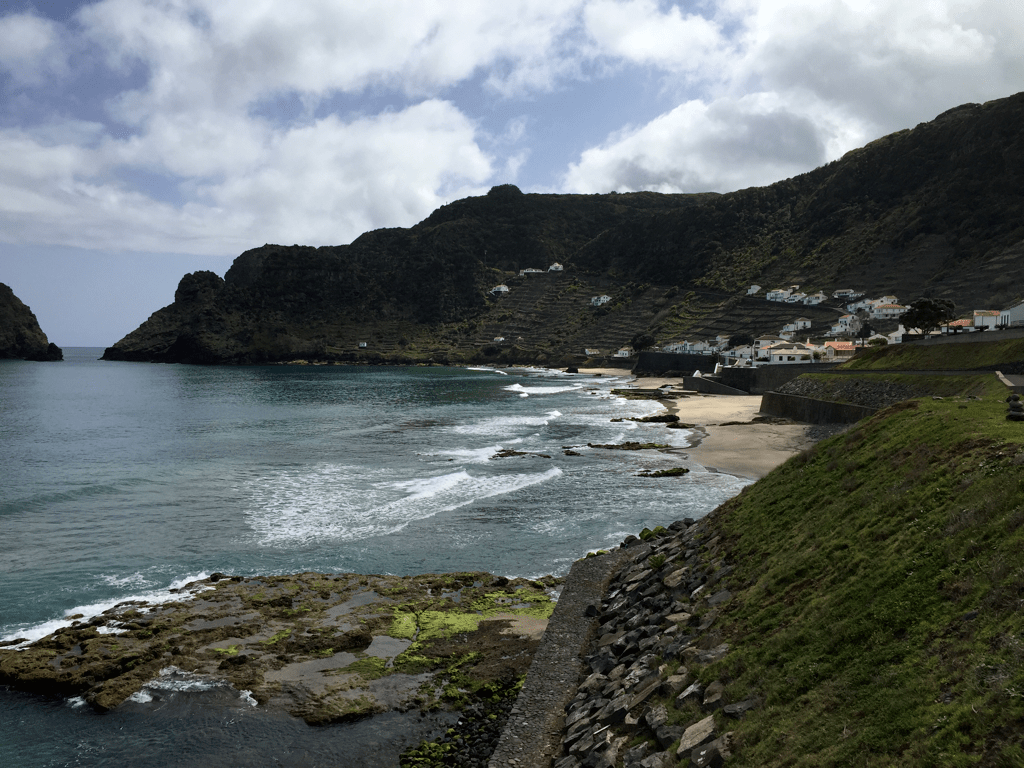
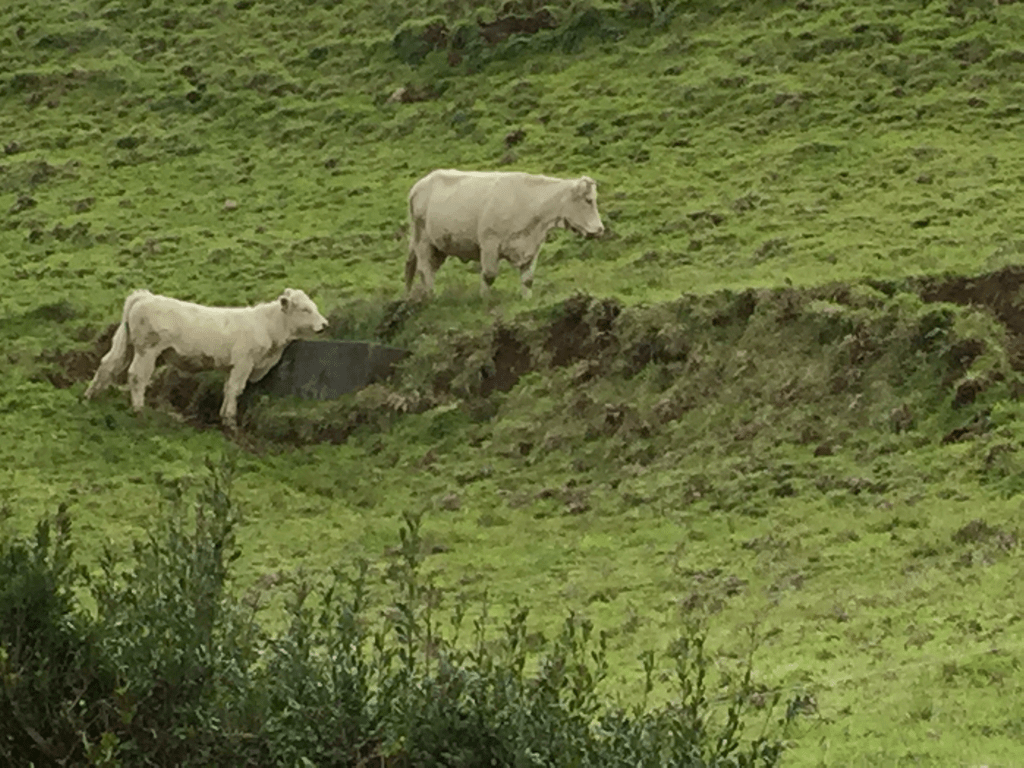
I have an ancestor from Santa Maria, Azores. His name is António Ferreira Couto, and he was born probably between 1660 and 1680. He married a woman named Catarina Velho, who was probably also born on the ilha de Santa Maria, but I don’t know that for sure. António and Catarina are my 7th great-grandparents. Their son Manoel Pacheco de Sousa, who was born on the island of Sao Miguel, married Catarina de Sa on December 21, 1718, in Rosario, Lagoa, São Miguel. I don’t know why António and Catarina Velho left Santa Maria for Sao Miguel, and I don’t know why they settled in Santa Maria in the first place. But since I am here in Santa Maria exploring the beautiful beaches and the green fields—green as the fields in Ireland, greener even, and it is the day after Saint Patrick’s Day as I write this—and the mountains and the contented cows that produce the delicious butter that is better than any butter I could get at home, I thought I would try to find out more about him.

The path from António Ferreira Couto to my father, Edward Couto, should be a direct one, father to son to son to son. But no, it isn’t that simple. Azorean surnames do not get passed down in that way, and in fact Antonio is the ancestor not of my paternal grandfather, João do Couto, but of my paternal grandmother, Carlota Julia Ferreira. And it gets still more complicated. Carlota’s father was a Ferreira and her mother was a Pereira. António is her ancestor not on the Ferreira line but on the Pereira line. Here’s how the descendancy goes:

António Ferreira Couto is the father of Manoel Pacheco de Sousa.
Manoel Pacheco de Sousa is the father of Maria Moniz.
Maria Moniz is the mother of Manoel Moniz Pereira.
Manoel Moniz Pereira is the father of Francisco Moniz Pereira.
Francisco Moniz Pereira is the father of Francisca Jacintha.
Francisca Jacintha if the mother of Maria de Jesus.
Maria de Jesus is the mother of Carlota Julia Ferreira.

There was a period not long ago—mostly in the 19th century, which, to anyone who does genealogy is not long ago, in fact so recent that we can almost remember it—when women did not have last names. They did not automatically take their fathers’ names. They almost certainly had a middle name, as well as a religious name that they chose later. When they married they did not take their husbands’ names. That doesn’t make Azorean genealogy any easier to sort out, but it does strike me as sensible, feminist, and modern.

So how did my paternal grandmother’s ancestor manage to get hold of my paternal grandfather’s surname? Are my grandparents cousins? Am I my own vovó? I thought the Biblioteca Municipal might hold the answer. The librarians were friendly and fluent in English. They showed me to the room where they keep the genealogy books. And in no time I found my 7th great-grandfather’s name and learned that he was born on Santa Maria and married to Catarina Velho. But I already knew that.

The church records for all the islands of the Azores are on line, thanks to the Centro de Conhecimento dos Acores, the CCA. Santa Maria, the oldest of the nine islands, has the oldest records. Some of the record books have pages that are torn. Others have been damaged by salt air, moisture, the wrong kind of ink, or mice. The volunteers from the Church of Latter Day Saints did their best to piece the pages together before filming them. The earliest records are difficult to read, and the records do not go back far enough to cover the first inhabitants of the islands. As I sit here surrounded by the beauty of this island where he once lived, I have to admit that António Ferreira Couto has escaped me.

Lost in the Cemetery

When my great-grandmother Maria Julia da Costa Frias, my maternal grandmother’s mother, died in New Bedford in 1909, her family of new immigrants didn’t have enough money to erect a gravestone. Her grave had only a round stone marker with a number on it, small and sunk into the ground. There were many graves with markers instead of monuments; people were poor and struggling, with children to feed. My grandmother visited her mother’s grave often, and then less often as years went by. And the grass continued to grow. One day, years after Maria Julia’s death, my grandmother went to the cemetery accompanied by my mother, a young girl with no memory of the grandmother who had died while she was an infant. But during this particular spring season the cemetery grass had flourished; in fact, it covered all of the markers in that particular section of the cemetery, and it was impossible to read the numbers. My mother and grandmother were in basically the right place, but there were two unmarked graves side by side, and they weren’t sure which one was Maria Julia’s. My mother was wearing a necklace, a cross on a chain, and suddenly, maybe because of all the anxiety in the cemetery air, the chain broke and the cross fell to the ground. Was it a sign? My mother and grandmother decided it was, and for months afterward they planted flowers on the grave that the broken necklace had landed on.

Here’s the problem: They did try to find out for sure. They visited the cemetery office and inquired, and by that time they weren’t even sure what the number on marker should have said. But the office had absolutely no record of anyone named Maria Julia Frias buried there at all, in any grave, marked or unmarked. She didn’t exist.

On São Miguel, in the Azores, where Maria Julia was born, families had alcunhas, nicknames, to differentiate them from other families with the same surname. The alcunha could refer to a physical trait or to an activity or accomplishment. The Frias family’s nickname was Malassadas, referring to the delicious fried dough that Maria Julia might have been known for. As my family later learned, when Maria Julia died my grand-aunt Inez’s husband made all the arrangements with the cemetery, but he gave his mother-in-law’s name as “Maria Julia Malassada.” She was there in the records after all, but it took a while to find her. And the grave chosen by my mother’s broken necklace? It was the wrong one. All of that was straightened out, and the cemetery crew did a better job of trimming the grass and keeping the markers legible. All was well.

Fast forward many years to when my grandmother was an old woman in poor health. She was troubled by the fact that her mother’s grave didn’t have a monument, and she had been saving up the money to buy one. She finally had enough, and she asked my mother and my aunt Linda to go to the monument yard, choose a stone, and have it engraved. My aunt, who was superstitious, didn’t like the idea. “As soon as we buy the stone, she’ll die,” my aunt said. Her premonition turned out to be correct.

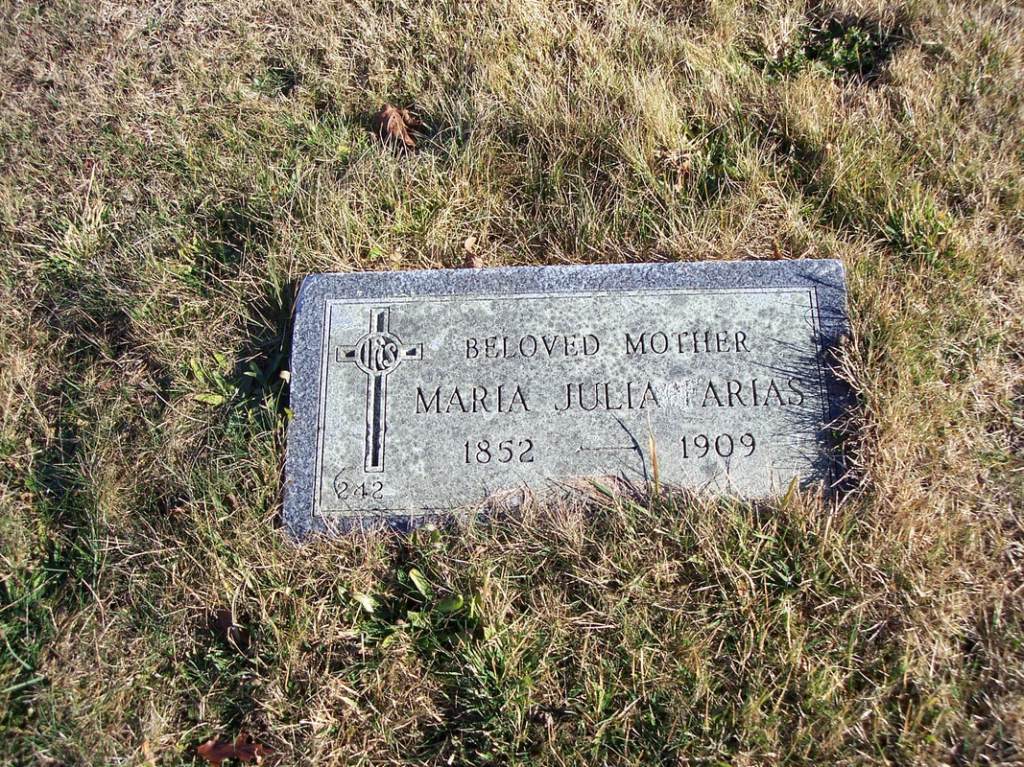
There’s one more twist: My grandmother’s brother spelled his name “Farias” instead of “Frias.” Nobody knows why he did that. “Frias” is the correct version; I know, because I’ve seen the church documents. But one day the brother’s daughter stopped by the monument yard to look at the stone, saw the instructions for the engraving, and said “You have the wrong spelling.” That’s why my great-grandmother’s gravestone has the wrong name on it.

Here’s yet another twist: My paternal grandmother’s mother, Maria de Jesus Pereira Ferreira, died in New Bedford in 1920. A few years ago I went to the cemetery to find out where she was buried. I knew the exact date of her death, and the cemetery pointed me to a grave for someone named “Maria J. Faria.” To my ear, “Ferreira” and “Faria” don’t sound anything alike, but nobody consulted my ear, and a lot of people couldn’t read, write, or spell in those days. I checked the death notice in the newspaper microfilms at the public library, and it checked out; Maria’s parents were listed, and they were definitely my great-great-grandparents.

Just because something is engraved in stone doesn’t mean it’s correct. Two great-grandmothers, no relation to each other, have gravestones with nearly identical names on them. And it is the name of neither of them.

Margarida, José, and the Queen

Margarida saw the Queen in that summer of 1901 when all the days were damp and filled with the smell of salt.  She couldn’t see the future through the fog, but she imagined machines, money, and motion, a city crammed with tenement houses and streetcars.  She was fourteen years old.  She and her mother, Maria Julia, had just arrived in Ponta Delgada, having said good-bye forever to aunts, uncles, cousins and friends, the living and the dead.  They had their freshly-issued passports, and their trunks were still in the cart that had carried them the short distance from Rosário, Lagoa.  Soon they would board the Dona Maria.  But what was that commotion?

They had forgotten all about it.  Yes, Queen Amelia and King Carlos were visiting Ponta Delgada, and there was the Queen right on the other side of a large group of cheering people.  Margarida, who was slim and quick, darted under elbows and between skirts to get a good look.  The Queen was tall and seemed kind.  She smiled and waved at the crowd.  I like to think that Margarida caught her eye, that she and the Queen were poised for a moment on a pivot in time, and that they would remember the moment always, even as they traveled in opposite directions, one to the New World and one back to the old maelstrom of political intrigues.  I know Margarida remembered.

Before she married Carlos, Amelia had been a French princess, the great-granddaughter of Louis Philippe, the “Citizen King.”  Louis Philippe had a long history of rolling with punches, starting with his years of exile when he earned a modest income teaching in a boys’ school and later traveled the world incognito.  Amelia must have inherited her great-grandfather’s talent for coping with sudden change, as she would demonstrate in 1908.  As the Royal Family crossed the Terreiro do Paço in an open carriage, a couple of assassins shot and killed the King and his older son, Crown Prince Luís Filipe.  But when a third shot hit the younger son, Prince Manuel, in the arm, Queen Amelia turned and whacked the gunman with a huge bouquet she had just been given, catching him off guard and saving Manuel’s life.  Those were big punches.  Amelia ordered some black dresses from her dressmakers.

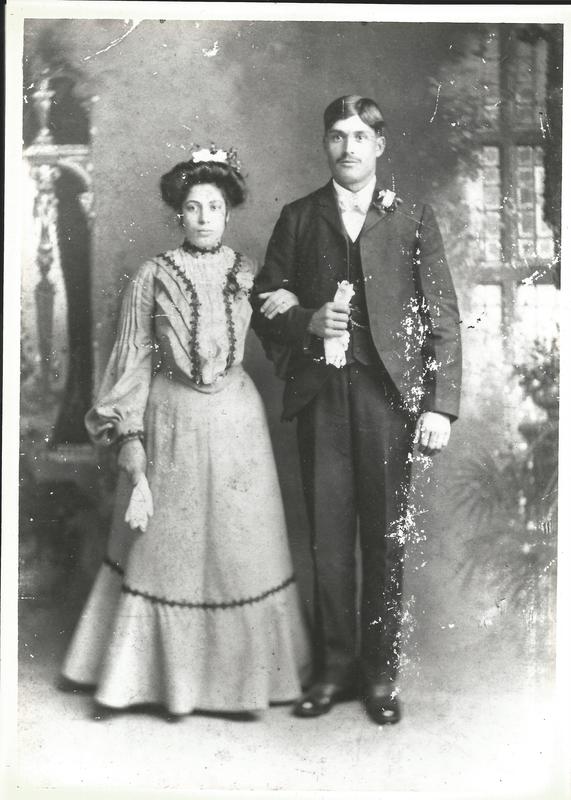
Margarida went to the school for immigrants.  She learned to say “I see the cat I see the dog” but wondered where that was going to get her.  Not very far, she decided, and she didn’t go back.  She met José at a dance.  He was good-looking, and she was slim and quick.  Where else but in New Bedford could a girl from Rosário, Lagoa, meet a boy from Ribeirinha, Ribeira Grande.  They married on April 1, 1905, and in no time at all they became Margaret and Joseph, although at home they still used the old names.  Joseph was a fireman.  He worked in the cotton mills, not putting out fires but keeping them going.  He also kept a dream going, a dream of becoming a citizen of the United States.  He practiced writing his name, Joseph Vieira, over and over again on scraps of paper.  His handwriting was shaky.  “Joseph” and “Vieira” were the only words he knew how to write.

The courtroom was so full of hope that Joseph could hardly breathe.  Soon he would raise his hand and take the oath of citizenship.  At least, that’s what he thought, but he had some punches to roll with, too.  There in the courtroom Joseph had a stroke, his first, and wasn’t able to take the oath.  Afterwards he had to walk with a cane.  He never became a citizen.  Years later, on a summer morning in 1941, Joseph went into the bathroom to shave and get ready for the day.  His second stroke was as sudden as an assassin’s bullet.  He died on the Fourth of July.  If Margaret had had a bouquet of flowers, she would have wanted to whack someone with it.  But there  really wasn’t anyone to whack.  So she bought some black dresses and a black coat and a black hat.  What else could she do?

Spitting Images

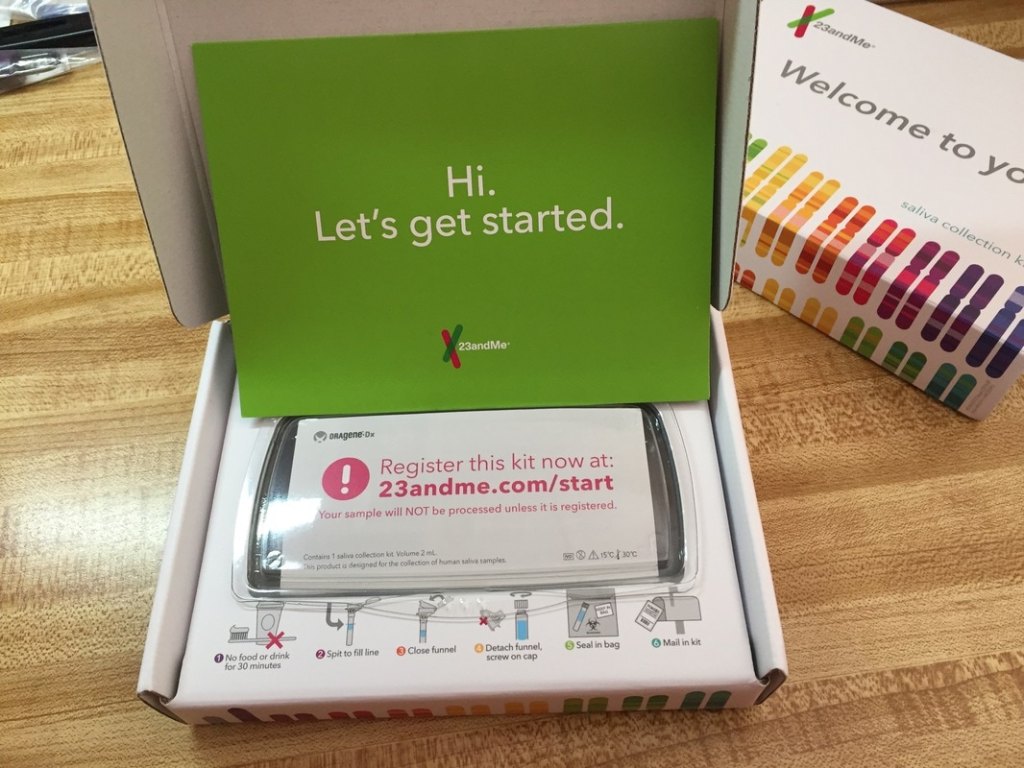
Whenever I find myself growing restless; whenever it is a damp, drizzly February in my soul; whenever I find myself involuntarily tapping on the Ancestry app on my phone or searching for memorials on Find A Grave; and especially whenever my genes get so hyper that it requires a strong moral principle to prevent them from dancing off to the American Bandstand of my imaginings–then, I account it high time to take another DNA test. I had already tested with Family Tree DNA and AncestryDNA, but, when I learned that 23andMe was offering a Valentine’s Day discount, I couldn’t resist. I ordered the test and waited for my kit to arrive.

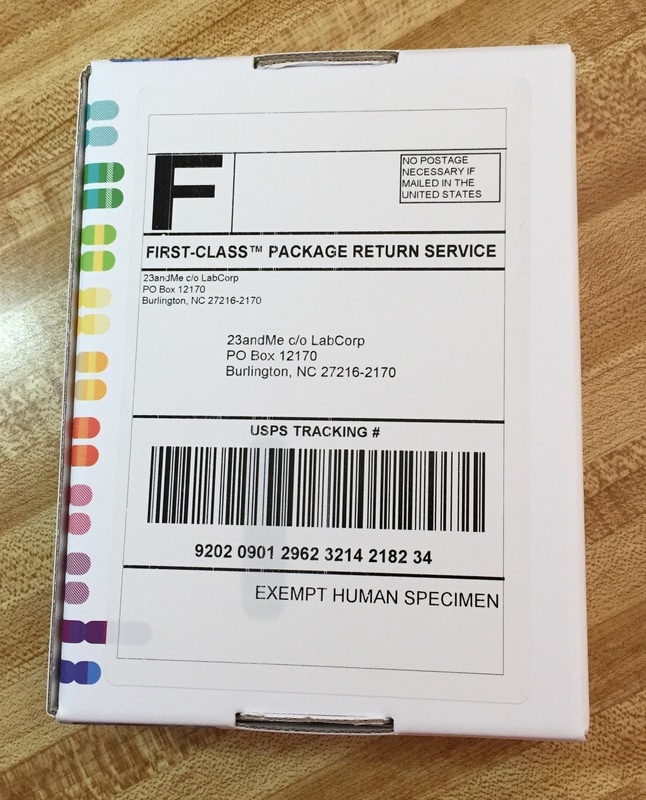
The saliva collection kit arrived promptly, with everything I needed and complete instructions. First step: No food or drink for at least thirty minutes before the test, and no chewing gum, either. That part should be easy, I thought, expecially since I’m not a gum chewer. Second step: Spit into the funnel until the saliva (not including bubbles) reaches the fill line. Both Ancestry DNA and 23andMe use the spit-into-a-tube method of collecting DNA. Family Tree DNA provides swabs for scraping the inside of the cheek. Both methods work, although spitting is, I think, easier than scraping; I was able to fill the tube in less than five minutes, so apparently I’m good at it. Steps three and four involve releasing the preservative sealed inside the funnel lid, unscrewing the funnel, and closing the tube securely with the small cap provided.  Next, the tube goes into a plastic bag, the bag is sealed, and the whole shebang goes back into its original box, which already has a mailing label on it.

Why take the same type of DNA test three times with three different companies? Each of the three major testing companies has a large database of results, with some overlap because of people like me, and testing with all of them provides more opportunities to find DNA cousins, compare research, discover a most recent common ancestor (MRCA), and add another branch to the family tree.

I put my box of “exempt human specimen” in the mail a few days ago, and 23andMe tells me it has reached their lab. Now all I have to do is wait.

Eating With the Ancestors: Curds and Whey

A while back our neighbors offered us a couple of bottles of raw milk.  Because of complicated laws regulating the sale of raw milk in New York State, consumers who want to buy unpasteurized milk on a regular basis sometimes work around the regulations by joining a buying club or purchasing shares in a herd–essentially subscribing to local milk deliveries on a regular basis.  Our neighbors were going on vacation, but the milk they had subscribed to was coming anyway.  All we had to do was pick it up and of course wash out the bottles afterwards. 

Those milk bottles, with a generous amount of cream at the top, reminded me of the milk of my childhood, but I should say right from the start that milk and I have always had a difficult relationship.  I remember that we had three kinds of milk in our tenement: chocolate milk, coffee milk, and plain milk.  Chocolate milk had some sort of cocoa powder stirred into it, while coffee milk was made with Silmo Coffee Syrup, a long-gone product that was once a staple in the New Bedford area.  Of the three, plain milk was the one I liked the least, although it was the simplest to prepare.  My mother would remove the orange cellophane from the top of the milk bottle, rinse the top of the cardboard cap, and give the bottle a vigorous shake.  Then she would remove the cap, pour some milk into a saucepan, and start warming it up.  Of course when my mother poured the warm plain milk over my breakfast Cheerioats, they immediately turned to mush. Truth is, I didn’t like Cheerioats much either, and changing the name to Cheerios didn’t make them any less mushy.  I didn’t know then, and didn’t learn until I was in college, that other people enjoyed their cereal with cold milk.

Today I like Cheerios quite a lot, but I prefer them with lactose-free milk straight from the refrigerator.  Yes, milk makes me sick–not terribly, horribly sick, just sickish enough to feel uncomfortable.  So, as appealing as those two bottle of raw milk looked, I wasn’t about to pour myself a tall one and drink it down.  I knew what I would do.  I would make some fresh cheese.

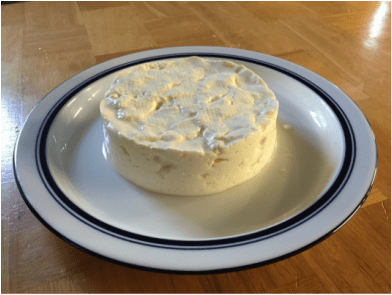
Fresh cheese is an Azorean treat, a simple cheese made with only two or three ingredients: milk, rennet, and sometimes salt. My mother made it often, possibly because she had extra milk in the refrigerator and the milkman was coming the next morning, or possibly because she knew my brother and I liked it.  Despite my problems with plain milk served in a glass, I loved most foods prepared with dairy products, especially fresh cheese but also goldenrod toast, cream of tomato soup, and creamed anything.  But could my mother have had another reason to include this shimmery white wonder in her cooking rotation?  Could there have been another explanation for the popularity of fresh cheese, or queijo fresco, among people of Azorean ancestry in the New Bedford area. 

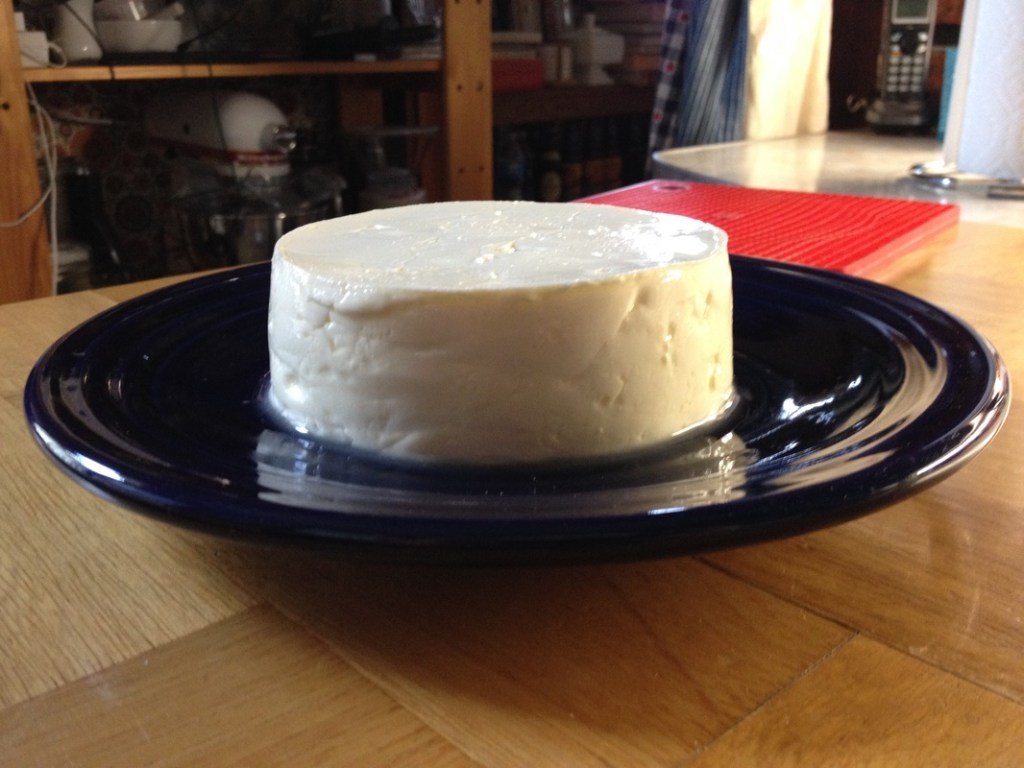
I made my fresh cheese, and I made it again, and when the raw milk was used up I made it with pasteurized non-homogenized milk.  I could have used homogenized milk.  My mother did after homogenization became the standard, and the cheese tasted just as good, although the texture was a bit grainy.  I could have used low-fat milk or skim milk, as those work, too, as does goat’s milk.  (Ultra-pasteurized milk would not have worked, and neither would soy or almond milk.)  I chose whole milk simply because that’s how my mother made it.  After months of experimenting with different types of molds (my mother used a one-pound coffee can with top and bottom removed) and different types of rennet, I finally produced a cheese I was happy with.  And while I was testing out variations on my mother’s recipe and hunting down other recipes on the web, I learned something interesting: when the coagulated milk has been spooned into its coffee can or cheese mold and the whey is draining out the bottom, most of the lactose in the milk drains out with it.  

My ancestors came from the island of São Miguel in the Azores.  I have traveled several times to mainland Portugal and the Azores, and the only hotels where I was served fresh cheese with my breakfast–two different hotels on two different trips–were in Ponta Delgada, on São Miguel.  Nowhere else in this country of amazing cheeses was I served fresh cheese, although my hotel in Angra, on Terceira, included the different but equally wonderfully São Jorge cheese as part of its breakfast buffet.  I can’t help wondering whether the residents of São Miguel have an especially high incidence of lactose intolerance.  I’m only guessing, of course.  I’m guessing that my mother, a descendant of Micaelense parents, was lactose intolerant, although the term was not tossed around in those days.  I don’t think she knew that when milk is heated some of its lactose is broken down, but she fed me a cup of warm chocolate or coffee milk first thing in the morning, every morning, for years.  It seems that whenever she reached for a bottle of milk with one hand, she reached for a one-quart saucepan with the other.  And she made fresh cheese often.  

Last weekend our neighbors offered us another half gallon of raw milk.  The bottle is in the refrigerator right now, a gleaming reminder of what life was like before something as simple as milk from a cow was subjected to commodification and hyperregulation.  But what do I know about the dairy industry?  Here’s what I do know:  If I warm a quart of milk in a saucepan, if I add a small amount of powdered or liquid rennet, if I let the warm milk set for a few minutes, if I transfer the curdled milk into a cheese mold, if I patiently wait for the whey to drain out, if I do all of this and maybe add a couple of optional extra steps, I will have a smooth white cheese about the diameter of a coffee can and slightly more than an inch tall.  I will cut myself a good-sized wedge, and I will salt it generously.  When I taste it I will think of the cheeses that my mother made, and I will be surrounded by memories that I do not have of ancestors that I never had a chance to meet.  The cheese will not stand alone.